




Heat Exchanger Flushing and Replacement
The heat exchanger is one of the most heavily loaded components of the heating and hot water system. Over time, limescale deposits, corrosion products and other contaminants accumulate, reducing heat transfer efficiency. A fouled heat exchanger means higher energy consumption, lower hot water temperature and faster equipment deterioration. SIA Alpex carries out professional heat exchanger chemical flushing and replacement in Riga, Jurmala and the Riga District, helping to maintain your heat supply system’s efficiency and extend equipment service life.
Services
- Plate heat exchanger chemical flushing – dissolving deposits with special solutions without removing the heat exchanger
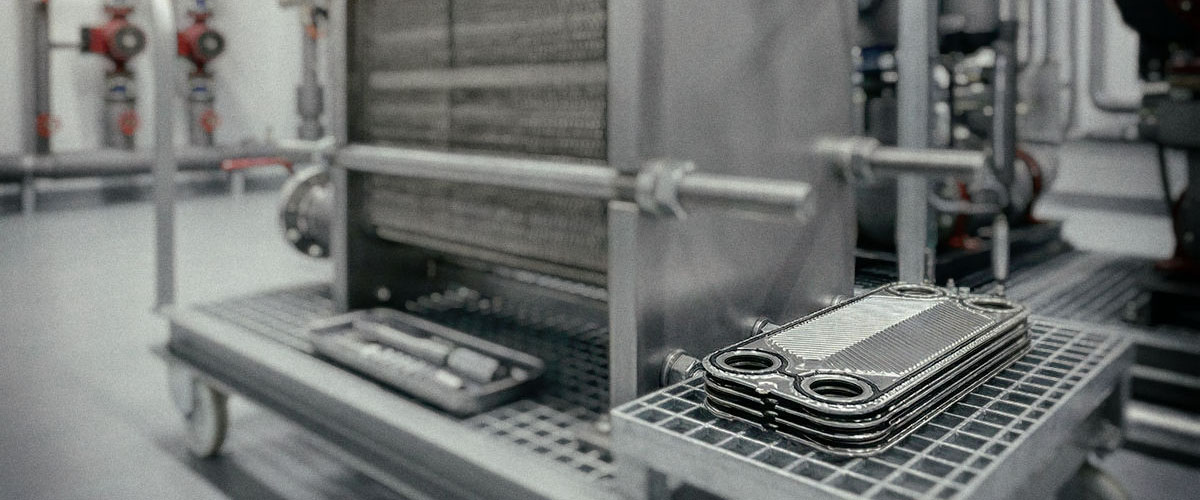
- Heat exchanger removal and mechanical cleaning – plate separation, manual cleaning, visual condition assessment
- Gasket replacement – replacing worn rubber gaskets, restoring heat exchanger seal integrity
- Heat exchanger replacement – new equipment supply and installation when the existing unit is beyond repair
- Heat exchanger hydraulic testing – leak test after maintenance or replacement
- Heat exchanger selection consultations – capacity calculation, manufacturer and model recommendations
When to Call
The heat exchanger needs maintenance or replacement if you notice:
- Hot water temperature has decreased although the heat substation is working correctly
- Heating system output has dropped – radiators are not sufficiently hot
- Heat energy consumption has increased without an obvious reason
- Visible water leaks or corrosion marks on the heat exchanger
- The pressure differential between heat exchanger inlet and outlet has increased significantly
- Heat exchanger plates are visibly deformed or damaged
- More than 2-3 years have passed since the last flushing
Our Approach
We begin heat exchanger servicing with an equipment condition assessment. We check the pressure differential, temperature parameters and visually inspect the heat exchanger. Based on diagnostic results, we propose the optimal solution – chemical flushing, mechanical cleaning or replacement.
During chemical flushing, we use specially selected solutions that effectively dissolve limescale and corrosion deposits without damaging heat exchanger plates and gaskets. The process typically takes 4-8 hours depending on the degree of contamination.
If the heat exchanger is severely worn or mechanically damaged, we offer replacement. We help select a new heat exchanger of the appropriate capacity and size, and carry out removal and installation.
Service Area
We carry out heat exchanger flushing and replacement throughout Riga, Jurmala and the Riga District. We service apartment building heat substations, private house heating systems and commercial properties.
Why Alpex?
- 25+ years of experience – we have been working with heat supply equipment since 1998
- Professional equipment – flushing stations, chemical solutions and diagnostic instruments
- Certified specialists – qualified to work with heat supply equipment
- Insured operations – civil liability insurance
- Fast completion – flushing is typically completed within one working day
- Warranty – we provide a warranty for completed work
FAQ
How often should a heat exchanger be flushed?
This depends on water quality and system load. Flushing is generally recommended every 1-3 years. If water has high hardness (typical of Riga’s water supply), flushing may be needed more frequently. Regular flushing significantly extends the heat exchanger’s service life.
How to tell if the heat exchanger is fouled?
The main signs are reduced hot water temperature, increased heat energy consumption and increased pressure differential between heat exchanger connections. If instruments show these changes or you simply notice that hot water is no longer as hot as before, it may be time for flushing.
Does heat supply need to be interrupted during flushing?
During chemical flushing, the heat exchanger is temporarily disconnected from the system. If the building has two heat exchangers (for heating and hot water), they can be flushed one at a time, reducing the impact of the interruption. We plan work to minimise inconvenience.
When is it better to replace the heat exchanger rather than flush it?
Replacement is recommended if the heat exchanger is significantly corroded, plates are deformed, or repeated flushing no longer produces sufficient results. Also, if the heat exchanger is physically aged (typically after 15-20 years of operation), replacement may be more economically justified than regular maintenance.